

Sewage Backup Cleanup in Grand Rapids: Health Risks, Process & Costs
Table of Contents
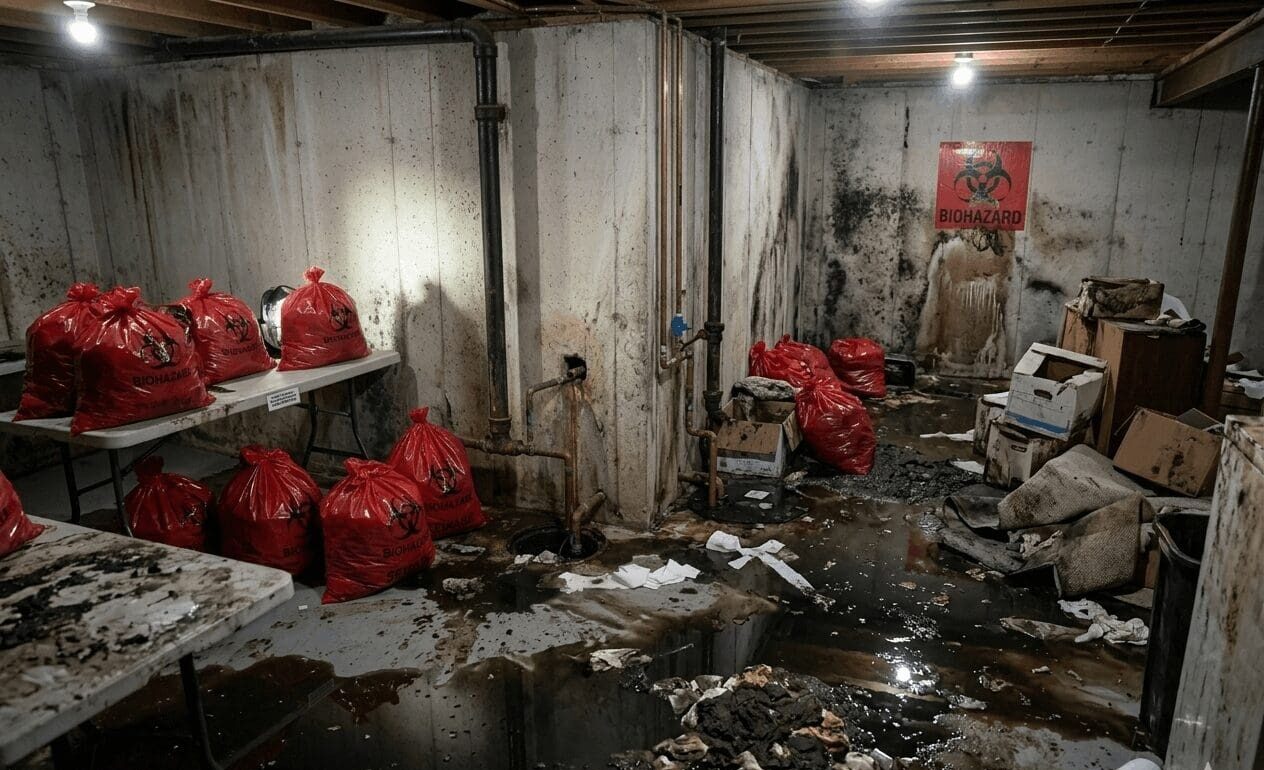
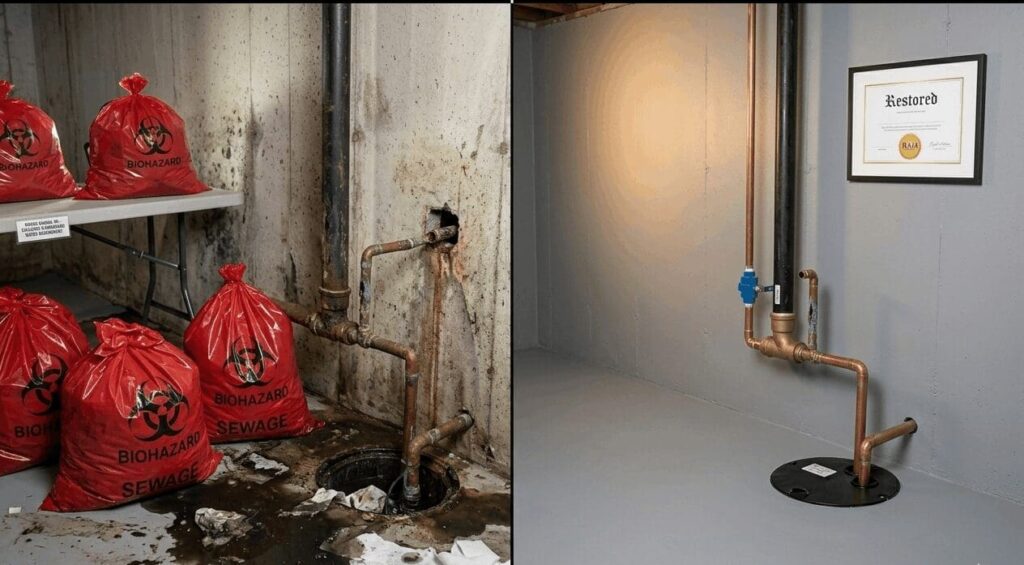
Sewage backup cleanup in Grand Rapids is a critical emergency that no homeowner ever wants to face. Finding raw sewage in your basement is a nightmare; one minute your home is fine, and the next, a foul-smelling, dark liquid is bubbling up through your floor drains, ruinously soaking into your carpet and drywall. At RAM Restoration, we know that the initial shock is quickly followed by intense stress: Is my family safe? How much will this cost? Can my home ever be truly clean again?
If you are currently dealing with a sewage crisis, time is your biggest enemy. This isn’t just a messy cleanup, it is a serious biohazard situation that requires a professional touch to ensure your property is restored to a safe, livable condition. This guide will walk you through the health risks, the professional mitigation process, and what you can expect regarding costs and insurance.
Is sewage backup covered by homeowners insurance in Grand Rapids?
In most cases, standard homeowners insurance policies in Michigan do not automatically cover sewage backups. Coverage typically requires a specific Water Backup and Sump Overflow endorsement. However, if the backup was caused by a sudden pipe burst on your property, parts of the damage might be covered under your base policy. We recommend reviewing your policy with a local Kent County agent to confirm your specific limits.
Why is Sewage Classified as Category 3 Water Damage?
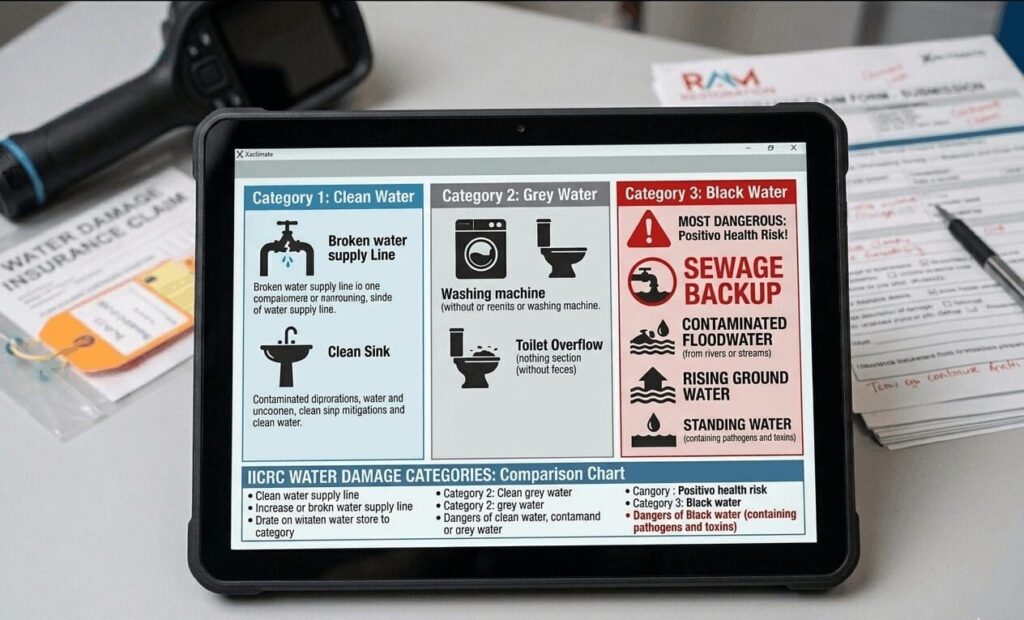
In the restoration industry, we follow the IICRC S500 standard, which categorizes water based on its level of contamination. Sewage is always classified as Category 3 water damage, commonly known as “black water.”
This classification means the water is grossly contaminated and contains pathogenic, toxigenic, or other harmful agents. Unlike a simple pipe leak (Category 1), black water cleanup in Grand Rapids requires specialized equipment and antimicrobial treatments because the liquid can contain everything from bacteria and viruses to chemical waste and heavy metals.
CDC Sewage Health Risks You Should Know
According to the CDC sewage health risks guidelines, exposure to raw sewage can lead to serious illnesses, including:
- Gastroenteritis: Often caused by E. coli or Salmonellosis.
- Hepatitis A: A viral liver infection spread through fecal-oral contact.
- Leptospirosis: A bacterial disease that can lead to kidney damage.
- Respiratory Issues: Caused by aerosolized endotoxins as the sewage dries.
How do professionals handle sewage overflow restoration?
A sewage overflow restoration is significantly more intensive than standard water extraction. Because of the biohazard nature of the waste, the process must be meticulous.
1. Inspection and Safety
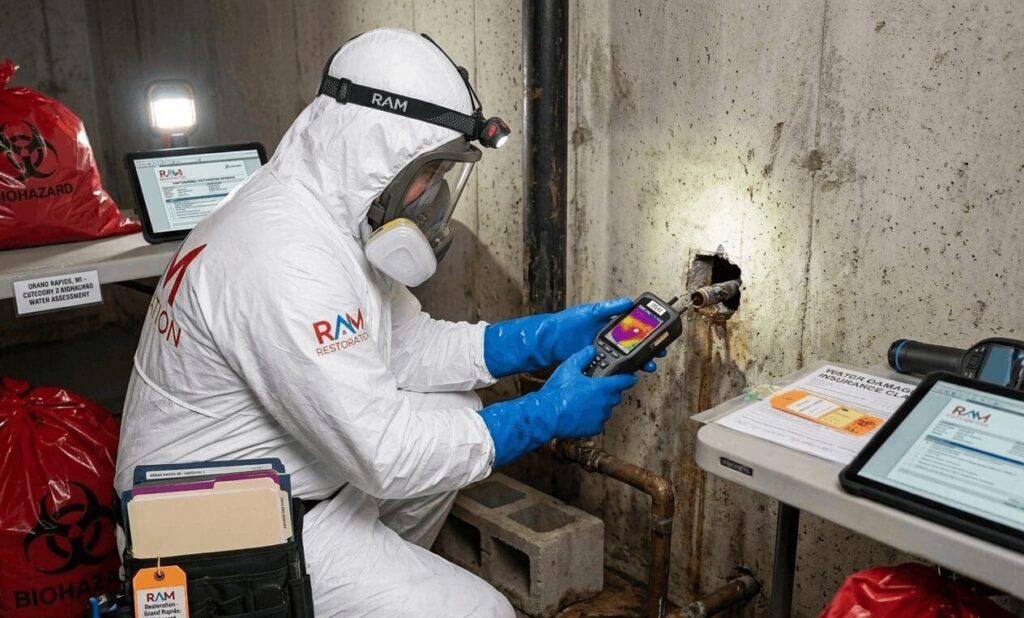
The first step involves a thorough assessment of the affected area while wearing full Personal Protective Equipment (PPE). We identify the source of the backup and ensure the area is contained to prevent cross-contamination to the rest of your home.
2. Biohazard Water Damage Removal
All standing water is extracted using industrial-grade vacuums. However, the most critical part of this stage is the removal of porous materials. Items like carpet padding, saturated drywall, and insulation act as sponges for pathogens and cannot be cleaned, they must be safely removed and disposed of according to Michigan EGLE regulations.
3. Cleaning and Sanitization
Once the debris is cleared, we use EPA-approved hospital-grade disinfectants to treat all hard surfaces (studs, subfloors, concrete). This step is vital to killing the microscopic bacteria that the naked eye can’t see.
4. Structural Drying
After sanitizing, we use high-velocity air movers and industrial dehumidifiers to pull moisture out of the structure. If the wood remains damp, you are at a high risk for secondary damage, such as mold growth.
Learn more about our professional Water Damage Restoration in Grand Rapids, MI here.
What are the most common causes of raw sewage in a basement?
Sewage backups in Grand Rapids are often the result of infrastructure issues or internal plumbing failures.
Does the Kent County Health Department regulate sewage cleanup?
Yes, the Kent County Health Department provides guidelines to ensure that sewage spills do not contaminate local groundwater or create public health crises. Property owners are responsible for ensuring that spills are handled by certified professionals who can document that the area has been returned to a sanitary state.
Can tree roots cause a sewage backup?
Absolutely. In older Grand Rapids neighborhoods with mature trees, roots often find their way into clay sewer pipes, creating a stubborn root ball that catches debris and eventually causes a total blockage.
Protecting Your Kent County Property
If you find yourself standing in a flooded basement in Grand Rapids, remember that safety comes first. Turn off the electricity to the area if it is safe to do so, and keep children and pets away from the water.
Call RAM Restoration for 24/7 Sewage Backup Cleanup in Grand Rapids
When biohazards strike, you need a team that reacts fast and follows the highest industry standards. RAM Restoration is the trusted choice for sewage backup cleanup in Grand Rapids and throughout Kent County.
We are IICRC certified, meaning we follow the strict IICRC S500 protocols for your safety and peace of mind. We offer 24/7 emergency response to minimize damage and get your life back to normal.
Don’t wait for the damage to get worse. Call Now: (616) 818-1700
- Request an Assessment: Contact Form
- Serving: Grand Rapids, Wyoming, Kentwood, and the surrounding communities.
FAQs: What Grand Rapids Homeowners Need to Know
How much does sewage backup cleanup cost in Grand Rapids?
The cost typically ranges from $2,000 to $10,000+ depending on the square footage and the amount of soft goods (carpet, furniture) affected. Because it is a biohazard (Category 3), labor costs are higher due to the required safety protocols and specialized disposal fees.
Can I clean up a sewage backup myself?
It is strongly discouraged. Without professional-grade disinfectants and PPE, you risk contracting serious illnesses or spreading contaminants through your HVAC system. A DIY attempt often leaves moisture trapped behind walls, leading to expensive mold problems later.
How long does the restoration process take?
The typical mitigation phase (cleanup and drying) takes 3 to 5 days. If structural repairs are needed such as replacing drywall or flooring, the full restoration may take 1 to 2 weeks.
Is the smell of sewage in my house dangerous?
Yes. The odor is caused by off-gassing from organic matter and bacteria. Inhaling these fumes over a long period can cause headaches, dizziness, and respiratory distress.
