


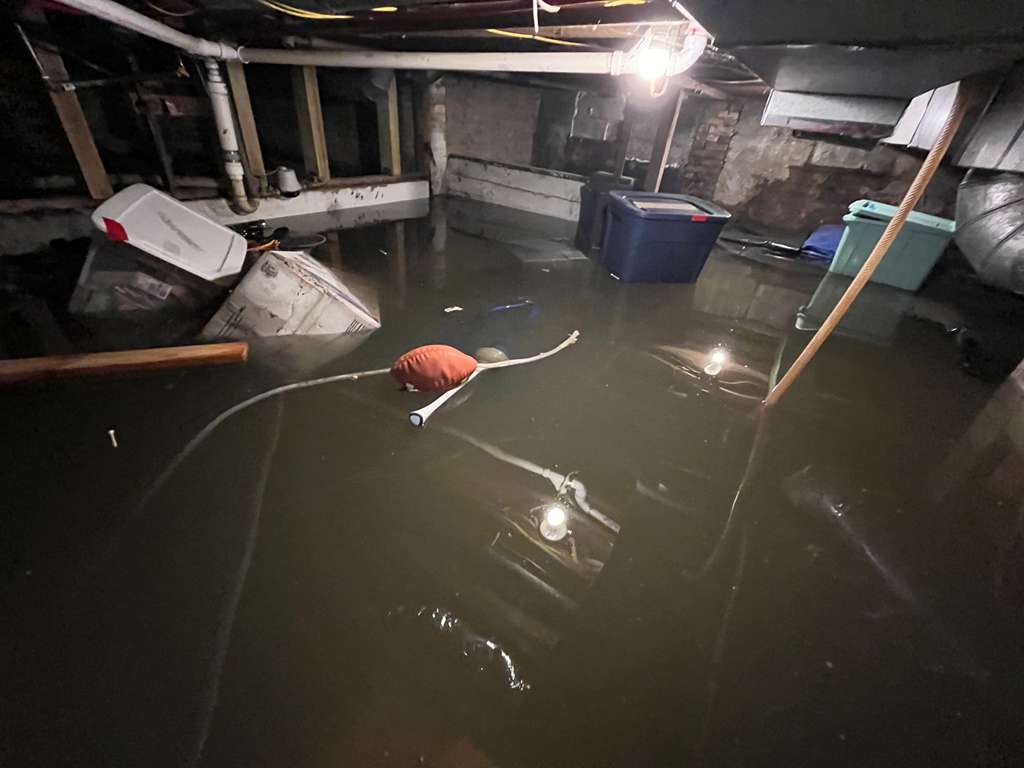
Expert Help for a Flooded Basement in Grand Rapids
Table of Contents
Waking up to a flooded basement in Grand Rapids is a homeowner’s worst nightmare. Whether it’s from a sudden West Michigan thunderstorm or a failed sump pump, the sight of standing water in your basement is enough to cause instant panic. At RAM Restoration, we know you aren’t just looking at water; you’re looking at your home, your memories, and your peace of mind being submerged. The frustration of dealing with basement flooding in Kent County is immense, but the actions you take in the next few hours will determine how much of your property can be saved. This guide provides the clear, actionable steps you need to navigate this crisis safely and effectively.
What should I do immediately if my basement floods?
If you have a flooded basement in Grand Rapids, your first priority is safety. Turn off the electricity to the basement if you can do so safely, wear protective gear, and identify the source of the water. To prevent permanent damage and mold, contact a professional for basement water removal in Grand Rapids within 24 to 48 hours to begin the structural drying process.
How-To: Managing a Flooded Basement
A step-by-step professional guide for homeowners dealing with basement water removal in Grand Rapids and Kent County following a flood or sump pump failure.
2–5 Days
Step 1: Prioritize Safety Above All Else
Before you step into the water, you must ensure you aren’t walking into an electrical hazard. Water and electricity are a lethal combination. If your circuit breaker is located in the basement and you have to walk through water to get to it, do not touch it. Call an electrician or your utility provider instead.
Step 2: Identify the Source of the Flooding
Is the water coming from a burst pipe, or is it a sump pump failure cleanup situation? In Grand Rapids, heavy rains often overwhelm the Grand Rapids stormwater system, causing hydrostatic pressure to push water through foundation cracks.
Step 3: Immediate Basement Water Removal in Grand Rapids
Standing water is a ticking clock for your home’s structure. The longer the water sits, the deeper it penetrates into porous materials like drywall and wood framing. This is why professional basement drying services are critical. We use high-capacity pumps to clear the area much faster than a standard shop-vac ever could.
Step 4: Sort and Salvage Your Belongings
Move what you can to a dry area. Items like photos and heirlooms should be prioritized. However, be cautious with furniture and cardboard boxes; these act like sponges and can harbor bacteria, especially if the flooding involved a sewage backup.
Step 5: Professional Drying and Dehumidification
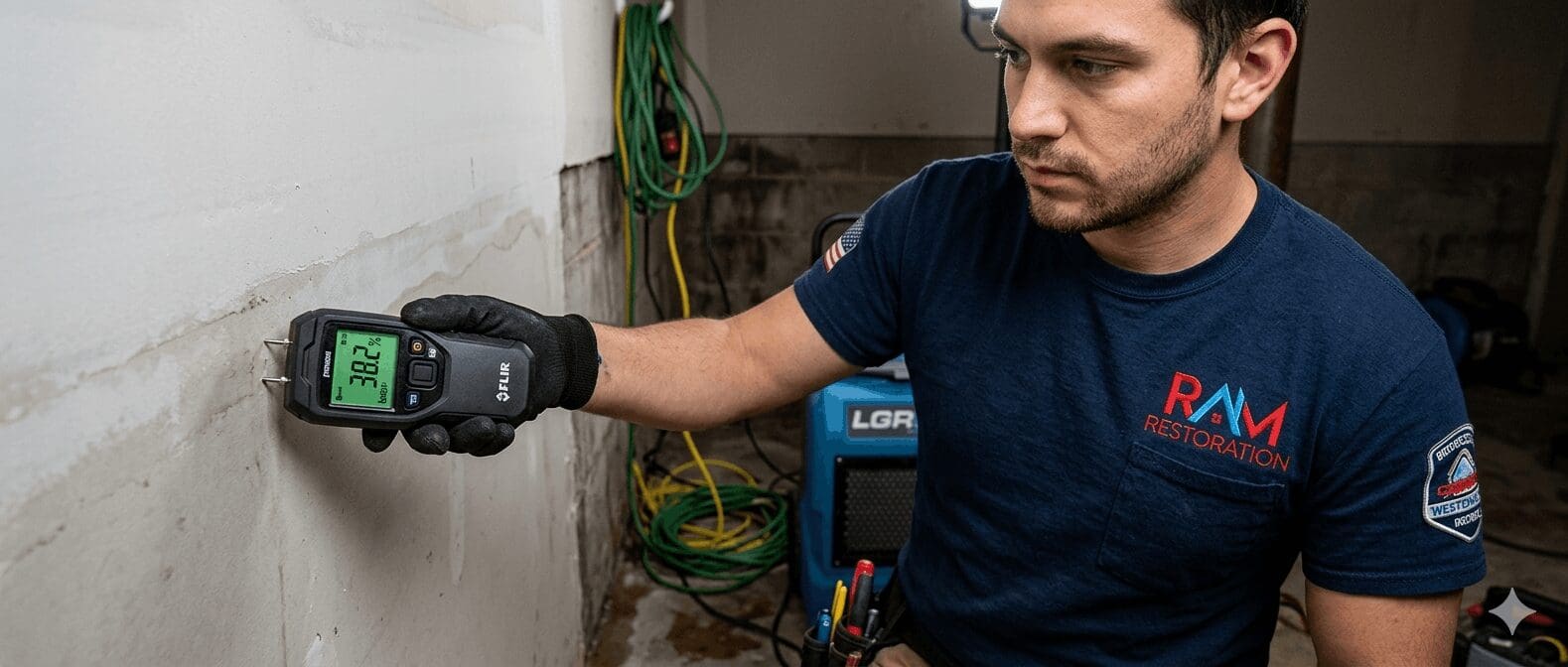
Removing the liquid water is only half the battle. To truly fix a flooded basement in Grand Rapids, you must address the “invisible” moisture trapped in the air and building materials. We follow the IICRC S500 standards for professional water restoration to ensure the environment is returned to a dry standard.
Step 6: Prevent Mold and Secondary Damage
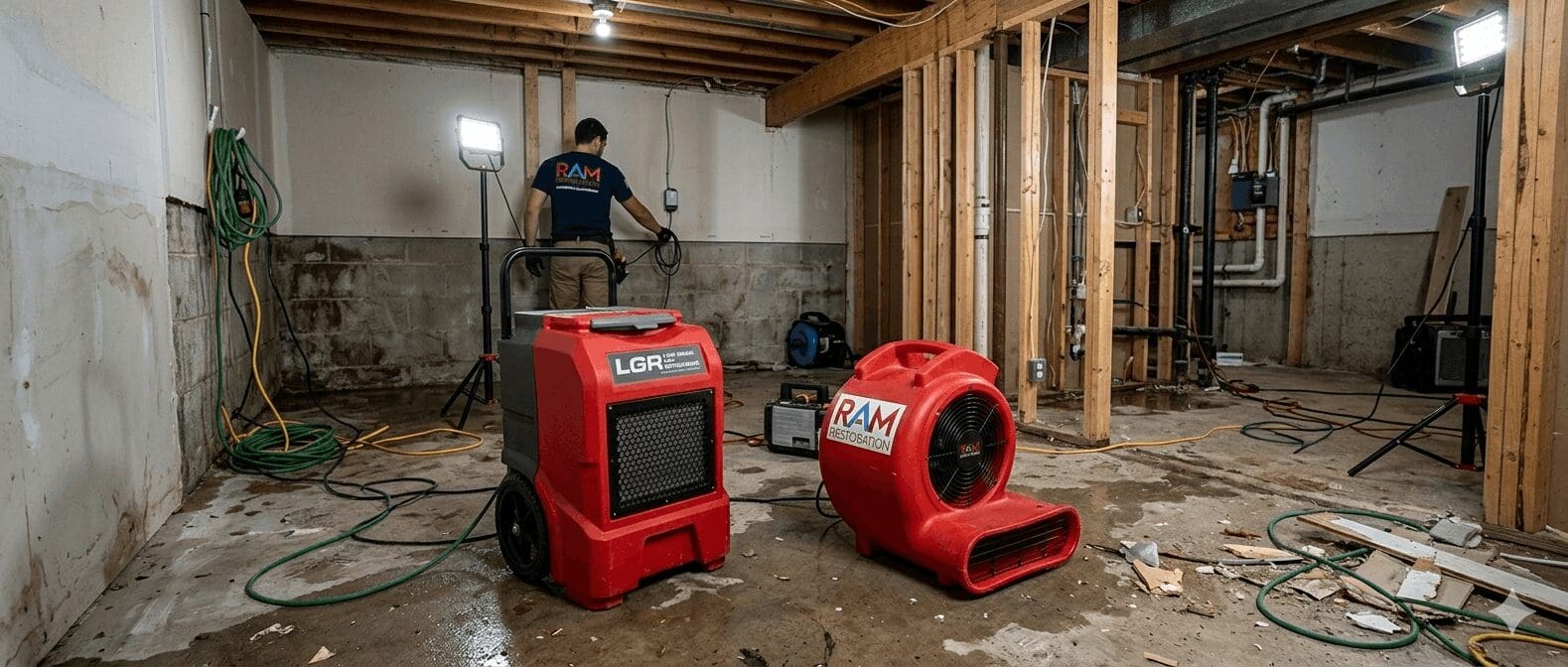
Within 24-48 hours of a flood, mold spores can begin to colonize. This is why immediate basement water removal in Grand Rapids is so vital. If you wait too long, you may find yourself dealing with mold after water damage, which requires a more intensive remediation process.
Step 7: Repair and Future-Proof Your Basement
Once the area is dry, it’s time to rebuild. This is also the best time to upgrade your defenses. Consider installing a high-quality battery backup system or a secondary pump to prevent future sump pump failure cleanup needs.
How can I tell if my sump pump failed?
You can tell your sump pump has failed if the water level in the basin is overflowing, the pump is making unusual grinding noises, or it isn’t running despite high water levels. Often, a flooded basement in Grand Rapids is caused by a pump that simply couldn’t keep up with the Grand Rapids stormwater system during a heavy storm.
How long does it take for a basement to dry after a flood?
A typical basement takes between 3 to 5 days to dry completely using industrial-grade equipment. The timeline depends on the volume of water, the types of materials affected (e.g., concrete vs. finished drywall), and the humidity levels in the home.
Will insurance cover my flooded basement in Grand Rapids?
Insurance coverage usually depends on your specific policy riders. While a pipe burst is often covered by standard plans, basement flooding in Kent County caused by surface water or sump failure usually requires a specific “Water Back-up” endorsement.
What are the best sump pumps for Grand Rapids homes?
For the heavy rainfall common in West Michigan, we recommend professional-grade brands like Zoeller or Wayne. These pumps are known for high durability and high-gallons-per-hour (GPH) capacity, which is essential when the local water table rises.
Trusted Basement Water Removal in Grand Rapids: Call RAM Restoration
Don’t face a flooded basement in Grand Rapids alone. RAM Restoration is the premier choice for water damage restoration in Grand Rapids, MI. Serving all of Kent County, our team is IICRC certified and available 24/7 for emergency response.
Whether you are dealing with a faulty Zoeller pump or a major pipe burst, we have the tools and expertise to dry your home fast. We handle everything from the initial standing water in basement extraction to the final sanitization.
Stop the damage before it spreads. Call RAM Restoration (616) 818-1700 now for a free assessment!
