


Replacing Drywall & Flooring After Water Damage in Grand Rapids: What to Expect
If you’re standing in a Grand Rapids living room staring at swollen baseboards and a drywall panel that has gone soft to the touch, you already know the sinking feeling that comes with water damage. Whether a pipe burst overnight or a spring storm pushed water into your basement, the stress of figuring out what can be saved and what has to go is real. Homeowners and business owners across Kent County ask the same question first: do you really need to replace drywall after water damage, or can it just be dried out?
The honest answer depends on how long the material stayed wet and how much moisture it absorbed. This guide walks you through what to expect when you replace drywall after water damage and restore flooring, from the first moisture readings to the final coat of paint.
Table of Contents
Does all drywall need to be replaced after water damage?
Not always. Under IICRC S520 restoration standards, drywall must be replaced not just dried when moisture readings stay above roughly 20% on a moisture meter for more than 24–48 hours, when the paper facing has started to break down, or when the water is Category 2 or 3 (contaminated). Drywall that was addressed within a day and never exceeded that threshold can often be dried in place and retained.
How Do You Know If Drywall Needs to Be Replaced After Water Damage?
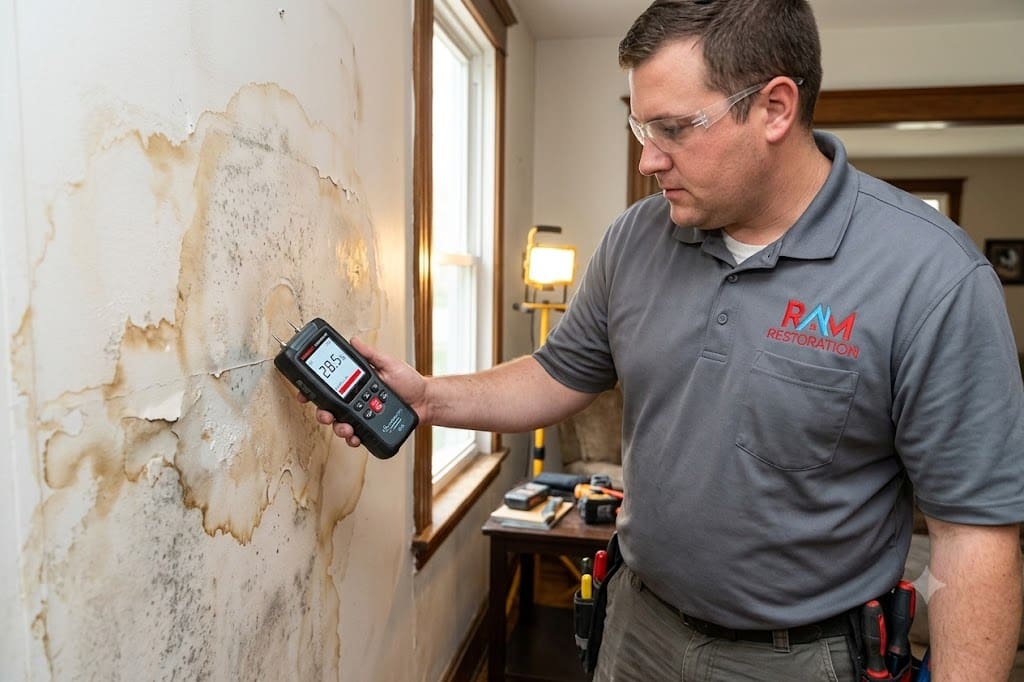
A certified technician answers this question with a moisture meter, not a guess. Following IICRC restoration phase standards, drywall is tested at multiple heights to map how far water wicked up the wall. If readings stay elevated after 48 hours of active drying, or if the panel has visible swelling, delamination, or a musty odor, it needs to come out rather than be dried in place. Insulation behind the wall is checked too, since wet fiberglass or cellulose rarely dries fully and is a common reason mold shows up weeks later.
This is exactly the kind of hidden risk we cover in our guide on how quickly mold grows after water damage in a Grand Rapids home, which is worth a read if your walls have been wet for more than a day or two
What Is the Water Damage Remodel Cost in Grand Rapids?
Every water damage remodel cost in Grand Rapids depends on the scope of demolition, the square footage affected, and whether flooring, drywall, or both need replacing. As a general range, homeowners in Kent County typically see drywall-only repairs in the low thousands, while combined drywall and flooring projects after significant flooding run higher once subfloor drying, mold-resistant materials, and finish work are included. Category of water (clean, gray, or black) also affects cost, since contaminated water requires more aggressive removal and disposal. The most reliable way to get an accurate number is a free on-site assessment rather than a phone estimate, since hidden moisture behind walls is common.
Replace Drywall After Water Damage: Step-by-Step Process
Drywall repair after a flood follows a consistent sequence so nothing gets rebuilt on top of hidden moisture.
1. Assessment & Moisture Mapping
Technicians document every wet surface with moisture readings and photos, which also supports any insurance claim.
2. Removal & Structural Drying
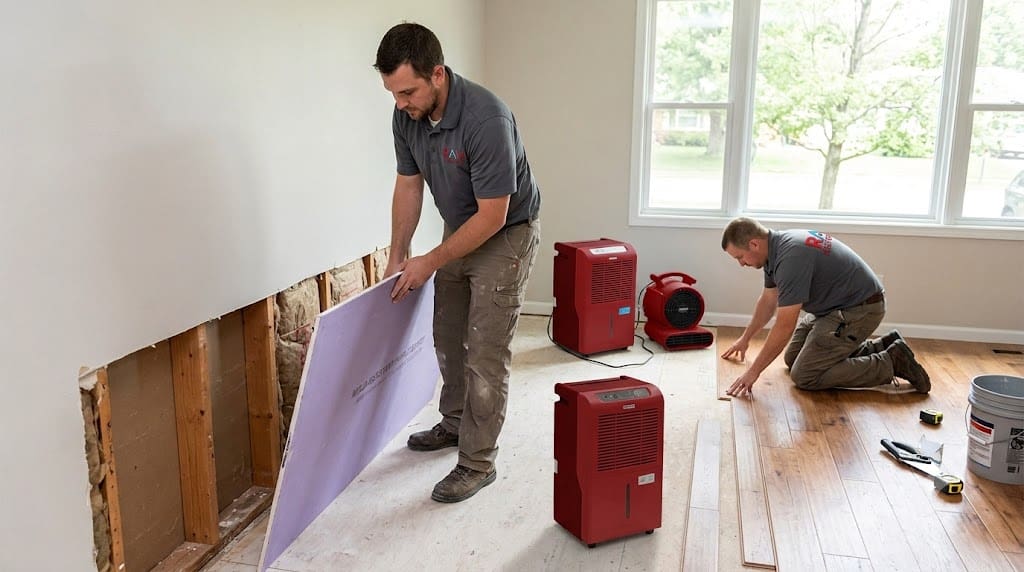
Damaged drywall is cut out typically to at least 12 inches above the visible waterline and industrial air movers and dehumidifiers dry the remaining structure to a stable moisture content before any rebuild begins.
3. Installation of Mold-Resistant Drywall
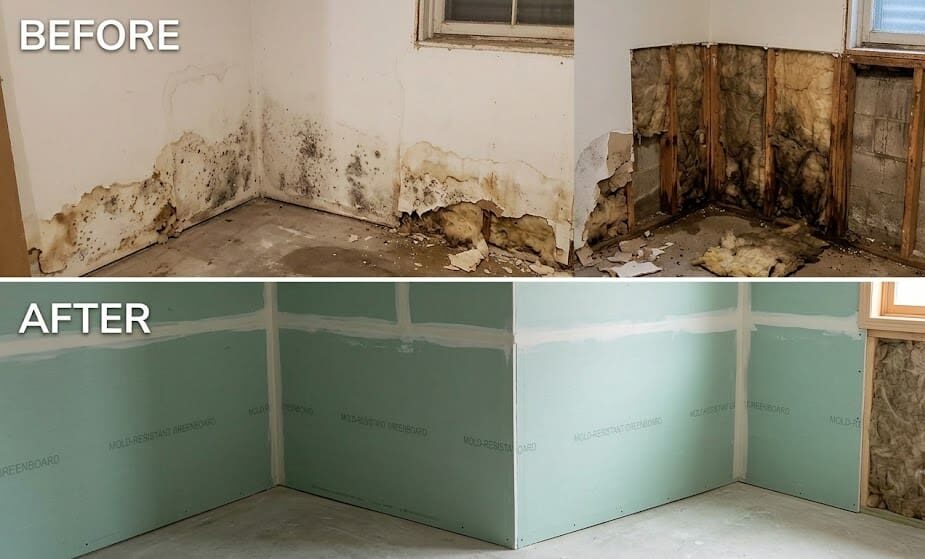
For areas prone to future moisture, such as basements and bathrooms, RAM Restoration installs mold-resistant drywall products like DensArmor and Purple Board as part of our home reconstruction after water damage services, giving Grand Rapids homes an added layer of protection against the next storm.
Should You Replace or Restore Hardwood Flooring After Flooding?
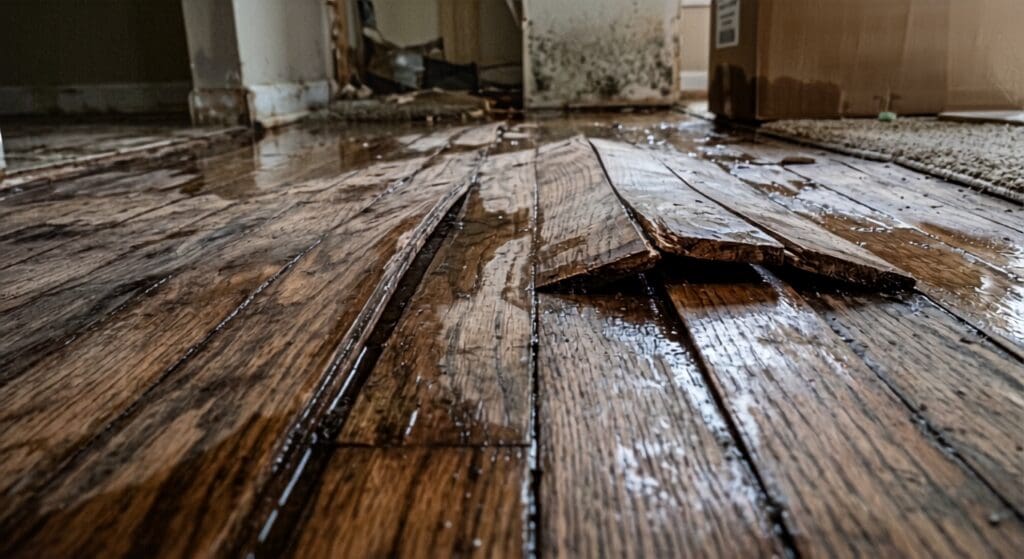
Hardwood floor restoration after flooding is possible in some cases, but it depends on how much the boards have cupped, buckled, or separated from the subfloor. If water exposure was brief and the subfloor dried quickly, sanding and refinishing can often save the original hardwood. But when boards have crowned, cracked, or the subfloor itself is saturated, water damaged flooring replacement is the safer long-term choice, since trapped moisture under refinished boards can lead to warping or mold months later.
What Building Codes and Regulations Apply to Grand Rapids Flooring Contractors?
Grand Rapids flooring contractors and drywall installers work within Michigan building codes, which set requirements for moisture barriers, subfloor preparation, and permitted materials in below-grade spaces. EPA drywall guidelines also inform how contaminated or mold-affected drywall should be removed and disposed of safely. Choosing a licensed, IICRC-certified contractor for your rebuild means these standards are built into the project from day one, rather than discovered during a resale inspection.
For the water extraction and drying work that has to happen before any rebuild, see our overview of water damage restoration in Grand Rapids.
How Long Does Water Damaged Flooring Replacement Take?
Most single-room water damaged flooring replacement projects in Kent County take one to two weeks once drying is complete drying itself can add three to five days before demolition even starts. Larger projects involving multiple rooms, subfloor replacement, or matching custom hardwood can extend that timeline. RAM Restoration provides a written project timeline during the free assessment so there are no surprises about when your space will be usable again.
Trust RAM Restoration to Replace Drywall After Water Damage
RAM Restoration has helped homeowners and business owners across Grand Rapids and Kent County rebuild after water damage, from a single soaked wall to a full basement remodel. Our team is IICRC-certified and follows S520 restoration standards on every job, and we’re available 24/7 for emergency water extraction so drying starts before drywall and flooring damage gets worse. If you’re not sure whether your walls or floors can be saved, don’t guess a free on-site assessment gives you a clear answer and a written scope of work.
📞 Call RAM Restoration Now (616) 818-1700 or Request Your Free Assessment to get your Grand Rapids home back to normal.
Frequently Asked Questions
Do I need to replace drywall after water damage, or can it be dried?
It depends on how long the drywall stayed wet. If moisture readings drop within 24–48 hours of drying and the paper facing is intact, drying in place is often sufficient. Prolonged saturation, swelling, or contaminated water typically requires replacement.
How much does it cost to replace drywall after water damage in Grand Rapids?
Costs vary with square footage and whether flooring is also affected, but most Kent County drywall-only repairs fall in the low thousands. A free on-site assessment from RAM Restoration provides an exact quote.
Can hardwood floors be saved after a flood, or do they need full replacement?
Minor, briefly wet hardwood can sometimes be sanded and refinished. Boards that have cupped, buckled, or separated from the subfloor usually need full water damaged flooring replacement.
Is mold-resistant drywall worth using during a rebuild?
Yes, especially in basements and bathrooms. Products like DensArmor and Purple Board resist moisture better than standard drywall and reduce the risk of future mold growth.
How fast should I call a restoration company after water damage?
Within 24 to 48 hours. Waiting longer significantly increases the chance that drywall, insulation, and flooring will need full replacement instead of drying.
Available 24/7/365 | IICRC Certified | (616) 818-1700 | Contact Us Online | Google Business Profile
