

Mold After Water Damage: How Quickly Does Mold Grow in a Grand Rapids Home?
Table of Contents
If you’ve just dealt with a burst pipe, basement flood, or roof leak in your Grand Rapids home, you’re probably running on adrenaline and stress right now and you may be wondering whether you’ve already lost the battle against mold. The truth is, mold after water damage is one of the most time-sensitive home emergencies a Grand Rapids homeowner can face, and the clock starts ticking the moment water touches your walls, floors, or insulation.
This post walks you through exactly how fast mold grows, what conditions accelerate it in Michigan’s climate, the warning signs to watch for, and most importantly what to do right now to protect your home and your family.
For Homeowners Who Need to Know Right Now
Mold can begin growing within 24–48 hours of water exposure, according to the U.S. Environmental Protection Agency (EPA), provided the conditions include temperatures between 40°F and 100°F and relative humidity above 60%. In Grand Rapids, where indoor humidity levels frequently rise due to the region’s humid continental climate, those conditions are easy to meet even in winter, when heating systems can trap moisture indoors. If your home has experienced any water intrusion, assume the mold growth clock has already started.
The Mold Growth Timeline: What Happens Hour by Hour
Understanding the mold growth timeline is critical if you want to prevent a small water problem from becoming a full remediation project. Here’s what the research and industry standards tell us:
0–24 Hours: Dormant Spores Activate
Mold spores are naturally present in nearly every indoor environment, they’re harmless when dry. But the moment water saturates porous materials like drywall, wood framing, carpet padding, or insulation, dormant spores begin absorbing moisture and preparing to germinate. During this window, there’s no visible mold yet, but the biological process has begun. This is your critical action window.
What to do: Extract standing water immediately. Use commercial-grade drying equipment or call a water damage restoration professional. Every hour of delay narrows your window to prevent mold entirely.
24–48 Hours: Germination Begins
This is the window the EPA specifically flags. Given temperatures above 40°F and relative humidity above 60% both of which are common in Grand Rapids homes year-round, mold spores will begin to germinate and produce hyphae (the thread-like root structures that anchor mold colonies). You still may not see anything visible, but mold is actively establishing itself inside wall cavities, beneath flooring, and in ceiling materials.
3–7 Days: Visible Colonies Appear
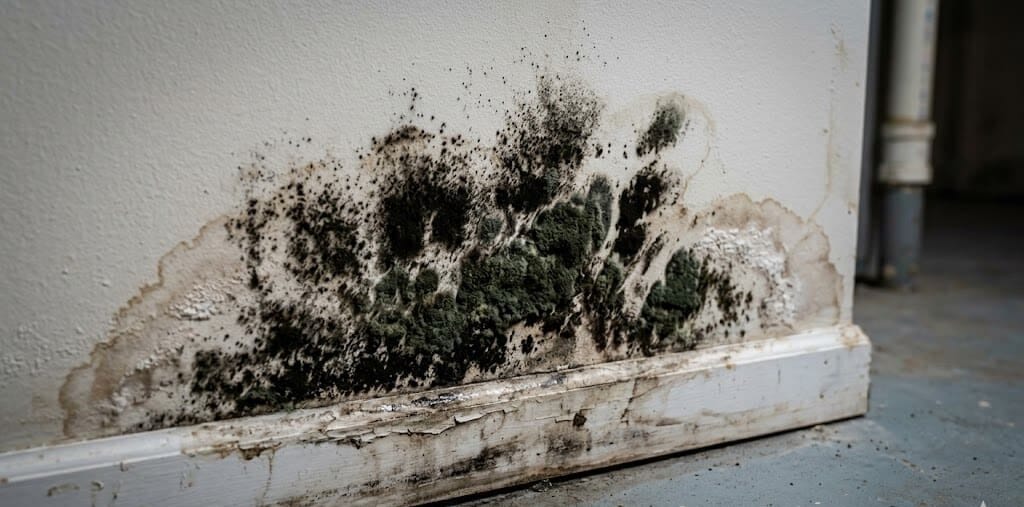
By day three, under favorable conditions, the first visible signs of mold begin to appear: fuzzy gray, green, or black patches; musty odors; and discoloration on walls or ceilings. Species like Cladosporium and Aspergillus are among the fastest-establishing, and both are common in Grand Rapids indoor environments. If you notice these signs, the mold is already colonized, surface cleaning alone will not solve the problem.
1–4 Weeks: Structural Damage and Health Risk Escalate
Left untreated, mold colonies spread rapidly. Stachybotrys chartarum, commonly known as black mold can begin developing on cellulose-rich materials like drywall paper and wood when chronic moisture is present. The CDC mold health guidelines make clear that prolonged mold exposure can cause respiratory issues, eye irritation, skin reactions, and in sensitive individuals, more serious health outcomes. At this stage, the scope of remediation required under the IICRC S520 standard, the industry benchmark for mold remediation expands significantly.

What Makes Grand Rapids Homes Especially Vulnerable to Mold After Water Damage?
Michigan’s climate creates ideal conditions for accelerated mold growth after any water intrusion event. Grand Rapids sits in a humid continental climate zone, and Kent County homeowners deal with several compounding factors:
- High baseline humidity: Michigan average indoor humidity levels frequently exceed 50–60% during spring thaw, summer months, and after winter storms when heating systems push warm, moist air through the structure.
- Older housing stock: Many Grand Rapids neighborhoods feature homes built before 1980, with wood-frame construction, minimal vapor barriers, and building materials that are highly porous and absorb moisture rapidly.
- Seasonal freeze-thaw cycles: Ice damming, pipe freezes, and roof intrusion are common in Kent County winters, and the water damage they cause often goes undetected inside wall cavities for days.
- Basement flooding: Proximity to the Grand River and low-lying areas throughout the region make basement flooding a recurring problem for many homeowners and basement environments, with limited airflow and cool temperatures, are ideal mold incubators.
For a comprehensive overview of how mold takes hold in Michigan homes and what professional remediation involves, see our Mold Remediation in Grand Rapids, MI: The Complete Homeowner’s Guide.
How Fast Does Mold Grow After Flooding?
Mold growth after flooding follows the same 24–48 hour window outlined by the EPA, but flooding accelerates the risk significantly because large volumes of water saturate structural materials simultaneously. Unlike a slow roof leak that affects one area, flood water can penetrate floors, walls, insulation, and HVAC systems in a single event, meaning mold can begin establishing in multiple locations at once. Floodwater also frequently carries organic matter and bacteria that provide additional nutrients for mold growth.
What Are the Early Warning Signs of Mold After Water Damage?
The early signs of mold growth after water damage include:
- A persistent musty or earthy smell, even after surfaces appear dry
- Discoloration or staining on drywall, ceilings, or wood, often gray, green, black, or orange
- Peeling or bubbling paint and wallpaper (moisture trapped beneath the surface)
- Soft spots or warping in walls and flooring
- Unexplained increases in allergy symptoms, coughing, or eye irritation among household members
It’s worth noting that mold growing inside wall cavities, beneath subfloor, or in insulation batts is often completely invisible until it has colonized extensively. This is why professional moisture assessment not just visual inspection is the appropriate response to any water damage event.

Can You Prevent Mold After Water Damage If You Act Fast?
Yes, with rapid, decisive action, mold prevention after water damage is achievable. The key factors are:
Speed of Water Extraction
Every hour of standing water increases saturation depth in porous materials. Professional water extraction equipment removes water at a rate that household wet-vacs cannot match, and this speed difference is often the determining factor in whether materials can be saved or must be removed.
Structural Drying to IICRC Standards
Simply removing visible water is not enough. The IICRC S520 standard requires that materials be dried to specific moisture content levels verified by calibrated moisture meters. Industrial air movers and dehumidifiers are used to drive moisture out of wall cavities, subfloor assemblies, and framing members. the areas where mold takes hold most aggressively.
Humidity Control
Maintaining indoor relative humidity below 50% during and after the drying process is essential to preventing mold growth. In Grand Rapids, where outdoor humidity is often high, this requires dedicated commercial dehumidification, not just open windows.
Antimicrobial Treatment
In cases where water saturation has persisted beyond 24 hours, or where contaminated water (Category 2 or Category 3 under IICRC guidelines) is involved, antimicrobial treatment of affected surfaces is a standard component of professional water damage restoration.
Does Humidity Alone Cause Mold Growth in Grand Rapids Homes?
High humidity alone without a direct water damage event can cause mold growth over time, though it typically develops more slowly than post-flood mold. In Grand Rapids, summer humidity mold growth is a real concern in basements, crawl spaces, and poorly ventilated attics. When relative humidity exceeds 60% for sustained periods, even without any visible water intrusion, condensation on cool surfaces like concrete walls, HVAC ducts, and rim joists creates enough moisture to support mold colonization. Michigan average indoor humidity benchmarks suggest that many homes run too wet during June through September without active dehumidification.

Don’t Wait — Call RAM Restoration for Emergency Mold and Water Damage Service in Grand Rapids
When water enters your home, every hour matters. RAM Restoration is Grand Rapids’ trusted local restoration company, proudly serving homeowners and businesses throughout Kent County and surrounding communities. Our certified technicians follow IICRC S520 standards for mold remediation and water damage restoration, the highest professional benchmark in the industry.
Here’s what you get when you call RAM Restoration:
- 24/7 emergency response — We respond any time, day or night, because water damage doesn’t keep business hours
- IICRC-certified technicians trained in mold assessment, containment, remediation, and post-remediation verification
- Moisture mapping and documentation using professional-grade equipment to find hidden water and mold that visual inspections miss
- Full-scope service from emergency water extraction through structural drying, mold remediation, and rebuild coordination, one team, one call
- Locally owned and operated, serving Grand Rapids and Kent County families with the responsiveness and accountability that national chains can’t match
If you’ve experienced any water damage event, flooding, pipe burst, roof leak, or sewage backup, don’t wait to see if mold appears. Contact RAM Restoration now for a free damage assessment. The 48-hour window is real. Let us help you beat the clock.
- 📞 Call Now: (616) 818-1700
- Request a Free Assessment: Link to Contact Form
- Visit Us: Serving all of Grand Rapids and the surrounding West Michigan communities.
FAQ | Direct Answers for Grand Rapids Homeowners
How quickly does mold grow after a flood?
Mold can begin germinating within 24–48 hours of flood exposure, according to EPA guidelines, when temperature and humidity conditions are favorable. In warm, humid Michigan summers, growth may begin even faster. Acting within the first 24 hours gives you the best chance of preventing colonization.
What type of mold grows after water damage?
The most common mold species found after water damage in Michigan homes include Cladosporium, Aspergillus, and Penicillium, all of which establish quickly on wet porous materials. Stachybotrys chartarum (black mold) develops more slowly but appears in cases of prolonged moisture exposure on cellulose-rich materials like drywall paper.
Is mold after water damage dangerous?
According to CDC mold health guidelines, mold exposure can cause respiratory symptoms, allergic reactions, and eye and skin irritation. People with asthma, allergies, or compromised immune systems are at greater risk. In cases involving extensive Stachybotrys growth, health risks are elevated and professional remediation is strongly recommended.
Can I remediate mold myself after water damage?
The EPA recommends that mold affecting areas larger than 10 square feet be handled by a professional. This threshold is easily exceeded after a significant water damage event. DIY surface cleaning does not address mold growing inside wall cavities, and disturbing mold without proper containment can spread spores throughout the home.
How long does mold remediation take after water damage?
Depending on the extent of growth and the materials affected, mold remediation in a residential property typically takes between 1 and 5 days. Water drying, which must precede or accompany remediation, may add an additional 3–5 days. An IICRC-certified professional can assess your specific situation and provide a timeline.
Does homeowners insurance cover mold after water damage in Michigan?
Coverage varies significantly by policy. Most standard homeowners policies in Michigan will cover mold remediation when it results directly from a covered water damage event (such as a burst pipe), but may exclude mold resulting from gradual leaks or flooding. Review your policy carefully and document all damage thoroughly before any cleanup begins.
Available 24/7/365 | IICRC Certified | (616) 818-1700 | Contact Us Online | Google Business Profile
