


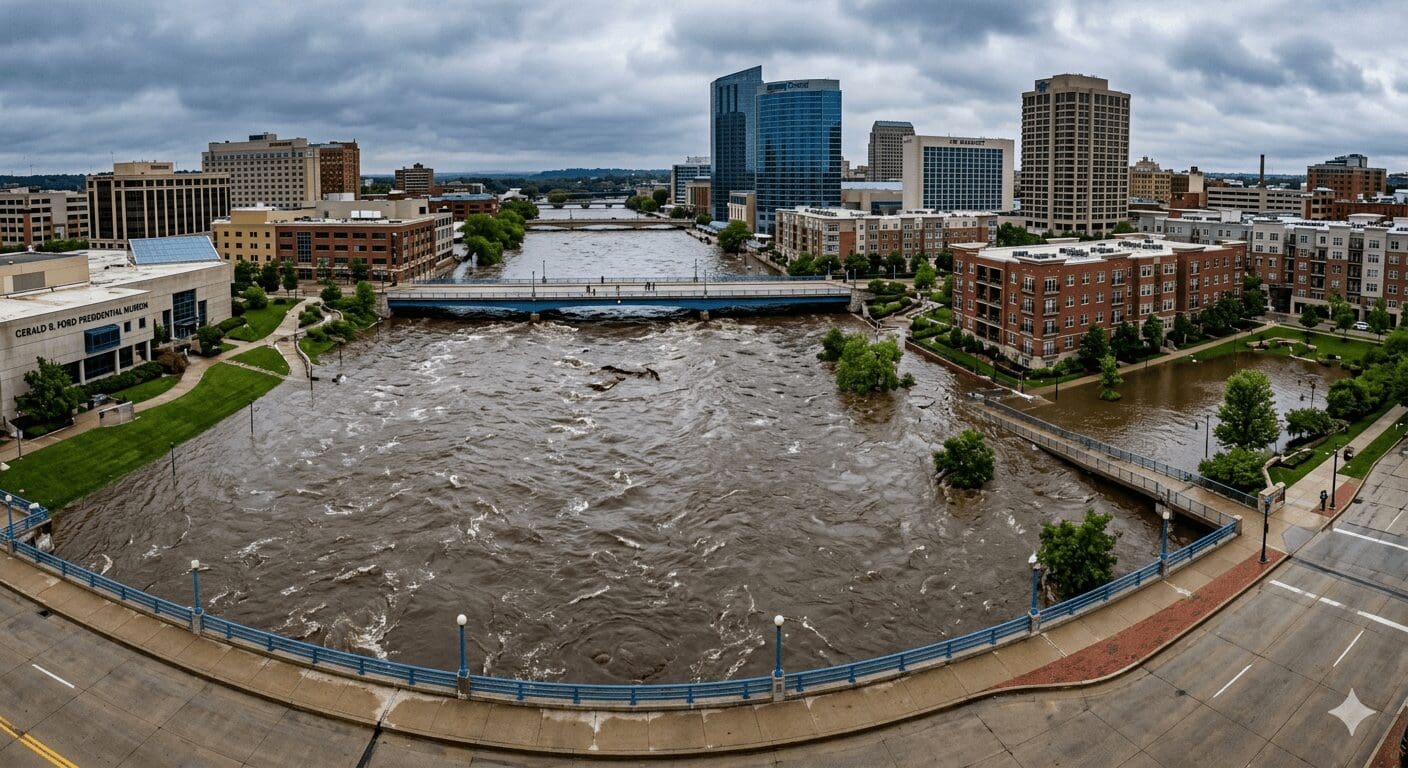
Grand River Flooding: How Grand Rapids Homeowners Can Protect Their Property
Table of Contents
Grand River flooding is a persistent reality for our community, and for many West Michigan neighbors, the rising banks of the “Big Old Muddy” bring a heavy sense of dread. If you’ve ever watched the rain pour down and nervously checked the river levels, you aren’t alone. We understand how overwhelming and helpless it feels to watch the water creep toward your doorstep. Whether you are currently dealing with a soggy yard or a flooded basement in Grand Rapids, this guide will provide the expert steps you need to safeguard your property, protect your investment, and finally find some peace of mind.
Homeowners can mitigate Grand River flooding risks by elevating critical utilities (furnace, water heater), installing high-capacity sump pumps with battery backups, and sealing foundation cracks with hydraulic cement. Additionally, securing flood insurance in Michigan through the NFIP and monitoring USGS river gauges are essential steps for long-term financial and physical property protection.
What is the Grand River flood history in Grand Rapids?
The Grand River flood history is marked by several major events, most notably the “Great Flood of 1904,” where the river reached a record crest of 20.4 feet, and the more recent 2013 flood that saw levels hit 21.85 feet. These events prompted the city to invest over $1 million in flood walls and embankments. Despite these protections, heavy spring snowmelt and “rain-on-snow” events continue to push the river toward its 18-foot minor flood stage regularly.
How can I determine the flood risk in Kent County for my specific address?
You can assess the flood risk in Kent County by visiting the FEMA Flood Map Service Center and entering your property address. Locally, the Kent County Drain Commission and the City of Grand Rapids stormwater office provide resources to help residents understand local drainage basins and specialized flood hazard areas. Properties near the North Park St. gauge or the downtown Pearl St. gauge are historically at higher risk during crest events.
Is flood insurance in Michigan required for all homeowners?
While not mandated by state law for everyone, flood insurance in Michigan is typically required by lenders if your home is located in a high-risk Special Flood Hazard Area (SFHA). Most standard homeowners’ insurance policies do not cover damage from rising river water. Obtaining a policy through the National Flood Insurance Program (NFIP) ensures that your structure and personal belongings are covered up to federal limits ($250,000 for the building and $100,000 for contents).
What are the most effective river flooding home protection methods?
Effective river flooding home protection involves both “dry” and “wet” floodproofing. Key methods include:
- Utility Elevation: Raising your electrical panel, water heater, and HVAC system at least 12 inches above the Base Flood Elevation.
- Foundation Reinforcement: Using masonry caulk to seal cracks and installing “flood vents” that allow water to flow through a garage or crawlspace to prevent structural collapse from hydrostatic pressure.
- Sump Pump Maintenance: Ensuring you have a primary and backup system to handle rising groundwater often associated with river crests.
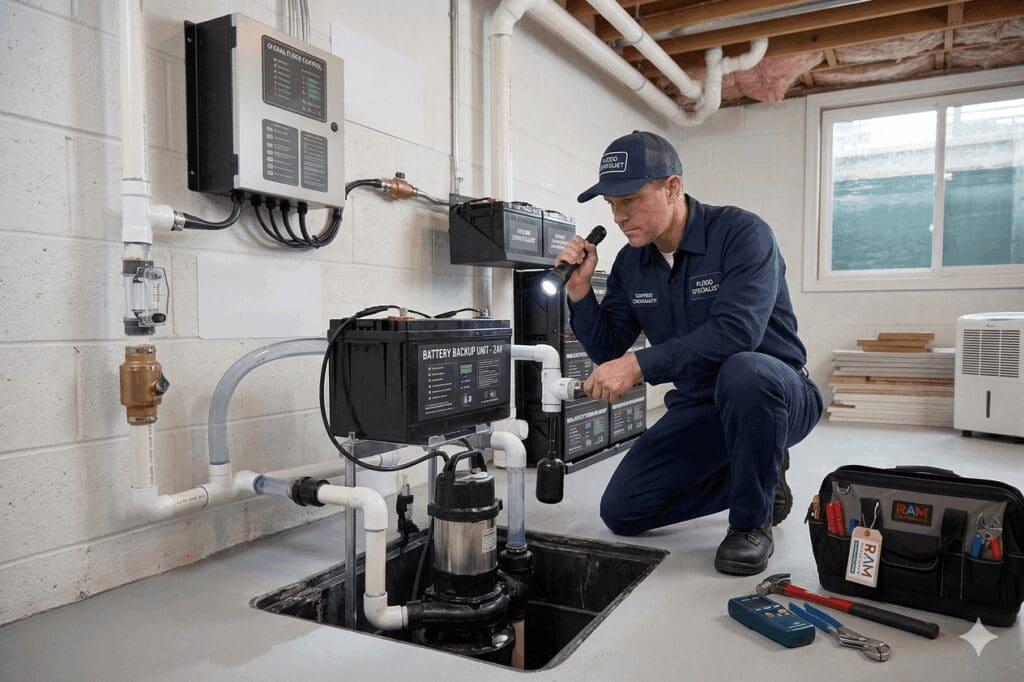
Monitoring Tools for Grand Rapids Residents
To stay ahead of the water, homeowners should bookmark the USGS river gauges for the Grand River at Grand Rapids. These gauges provide real-time data on river “stage” (height) and flow rates. The Michigan EGLE (Department of Environment, Great Lakes, and Energy) also monitors water quality and dam safety along the river, which can impact how quickly floodwaters recede after a storm.
Hardening Your Home’s Exterior
Beyond internal repairs, consider your landscaping. The Kent County Drain Commission often recommends rain gardens and permeable pavers to reduce the amount of runoff entering the municipal system. If you live in a low-lying area, temporary barriers like sandbags or modern “flood dam” tubes can provide a last-minute line of defense when the National Weather Service issues a flood warning.
For those who have already experienced water intrusion, it is vital to seek professional water damage restoration in Grand Rapids, MI to ensure that moisture is properly extracted and mold growth is prevented.
Understanding the Role of Local Agencies
The City of Grand Rapids stormwater office manages the complex system of catch basins and pipes that move water away from our streets. However, during a major Grand River flooding event, these systems can become “back-watered,” meaning the river is so high that the storm drains cannot empty into it. This is why having a backflow prevention valve installed on your sewer line is a critical, yet often overlooked, part of home protection.
Expert Restoration Services for Grand Rapids and Kent County
When the river rises faster than your defenses, you need a team that understands the local landscape. RAM Restoration has been the trusted partner for homeowners throughout Kent County for years, providing expert mitigation and reconstruction services.
We are proud to be IICRC certified, ensuring that every project meets the highest industry standards for safety and drying efficiency. We understand that water damage doesn’t follow a 9-to-5 schedule, which is why we offer 24/7 emergency availability to respond when you need us most.
Don’t let floodwaters take your home. If you are facing the aftermath of a flood or want to prepare your property for the next season:
- Call Now: (616) 818-1700
- Request a Free Assessment: Fill a form
Stay Safe: Follow all local evacuation orders and never drive through flooded roadways.
FAQs About Grand River Flooding
These are the most common questions regarding Grand River flooding and property protection in the West Michigan area.
How often does the Grand River flood in Grand Rapids?
Based on Grand River flood history, the river typically reaches minor flood stage (18 feet) every few years during the spring thaw. However, “major” flood events, like those seen in 2013, are less frequent but significantly more damaging. Residents should monitor USGS river gauges during periods of heavy rain or rapid snowmelt to stay informed.
Does a standard homeowners insurance policy cover river flooding?
No, standard insurance policies almost never cover damage caused by rising surface water or Grand River flooding. To protect your financial interests, you must purchase a separate policy through the National Flood Insurance Program (NFIP) or a private carrier. This is a critical component of flood insurance in Michigan for those living in high-risk zones.
What is the current flood risk in Kent County for my neighborhood?
The flood risk in Kent County varies by elevation and proximity to the river’s tributaries. You can check the FEMA Flood Map Service Center or contact the City of Grand Rapids stormwater office to see if your property sits within a 100-year floodplain. Even if you are outside a high-risk zone, localized drainage issues can still cause water intrusion.
What are the best methods for river flooding home protection?
The most effective river flooding home protection strategies include installing a sump pump with a battery backup, elevating your furnace and electrical systems, and using waterproof sealants on foundation walls. For those with a flooded basement in Grand Rapids, professional mitigation is required to prevent structural rot and mold growth.
Who should I contact for emergency flood cleanup in Grand Rapids?
For immediate assistance, contact RAM Restoration. We provide 24/7 emergency water extraction and drying services throughout Kent County. Our team is IICRC certified, meaning we follow the highest industry standards to restore your home safely after Grand River flooding impacts your property.
